
AASHTO T 412 Compliant Sensors
State Departments of Transportation are responsible for ensuring the strength, safety, and longevity of our nation’s infrastructure. With rising performance standards and increasing project complexity, DOTs need field-proven, standards-compliant testing tools they can trust.
The REBEL® Sensor System is fully compliant with AASHTO T 412 and provides real-time, in-place strength data—without requiring calibration or temperature-based maturity curves. This means higher accuracy, reduced variability, and accelerated timelines for field operations.
How DOTs Use REBEL Sensors in the Field
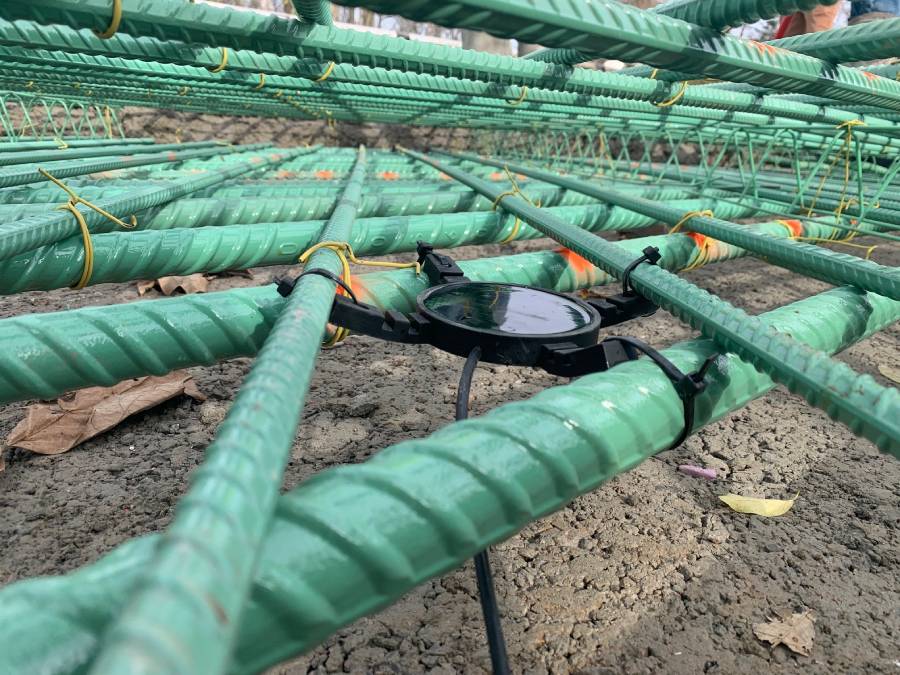
During placement, REBEL sensors are embedded into the concrete and begin measuring strength immediately. Data is transmitted wirelessly to a secure dashboard, allowing engineers, inspectors, and contractors to monitor progress remotely—with no delay and no extra steps.
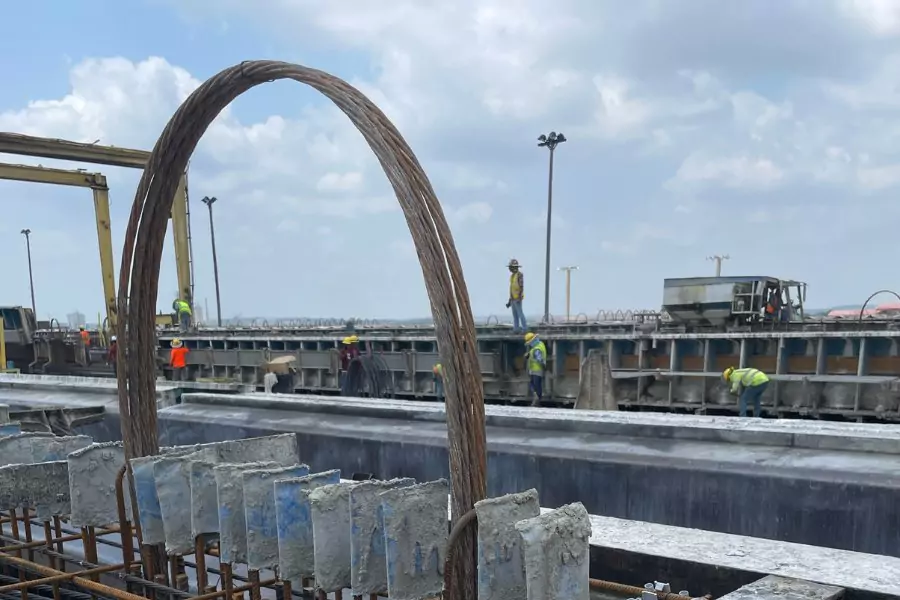
REBEL sensors have been successfully deployed across 17+ state DOTs, including MassDOT, INDOT, and TxDOT, in projects ranging from highways and bridges to airport runways and pavement repair.
Check out these test results to see how they perform in the field.
How Concrete Sensors Benefit the Department of Transportation
- AASHTO T 412 Compliance: Ensure testing aligns with national standards and supports QA/QC consistency.
- Faster Openings: Eliminate delays in form stripping, traffic openings, and inspections.
- Lower Testing Costs: Reduce reliance on cylinders, labs, and handling logistics.
- Audit-Ready Reporting: Generate real-time compliance documentation for federal audits, internal reviews, and funding justifications.
- Proven in the Field: Trusted by state agencies in diverse climates, mixes, and project types.
Frequently Asked Questions
Massachusetts DOT adopted AASHTO T-412 in January 2025. Iowa DOT went further in April 2026, approving acoustical resonance as a full replacement for cylinder breaks under IM 383.
REBEL® sensors have been deployed across 32 state DOTs in over 60 field trials, including INDOT (I-69 and I-465), TxDOT (road patching), Caltrans (I-10), and CDOT (I-25). Contact our team for the full state-by-state results report.
AASHTO T-412 is a standard that allows the use of embedded sensors for in-place concrete strength estimation, including acoustical resonance. When a state DOT adopts it, engineers can authorize traffic opening and contractor payment based on real-time sensor data instead of waiting for lab cylinder results.
No. REBEL® uses an acoustic method that does not require calibration or maturity curves. This means if a mix changes mid-project, the sensor keeps working without any additional setup.
Every reading is time-stamped and stored on the Wavelogix cloud dashboard, giving engineers, inspectors, and contractors a shared real-time record they can reference at any point in the project.
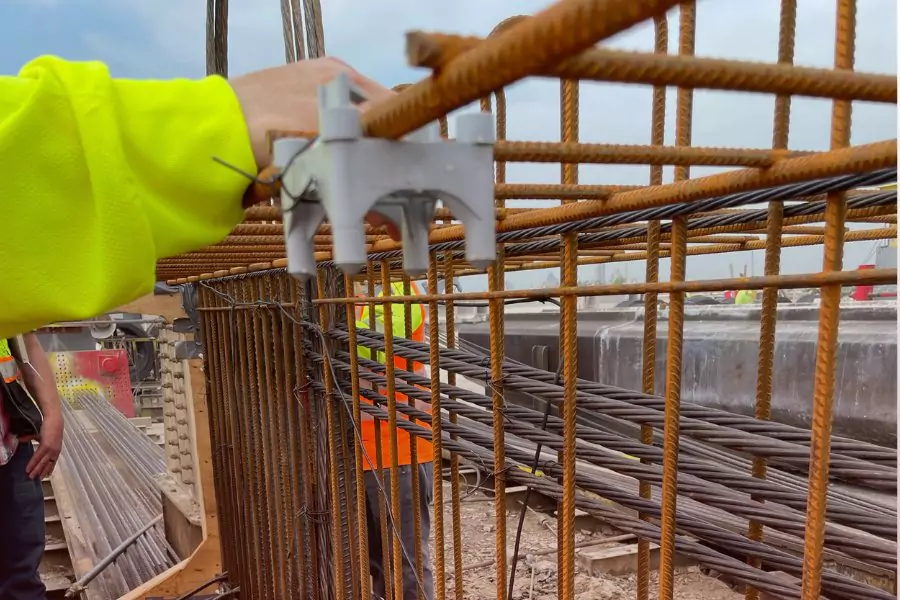
Yes. For pavement pours, sensors are placed on the roadbed before the pour. For structures and bridge decks, they strap to rebar. In both cases the sensor detects the pour and begins transmitting strength data automatically.
Get in touch and our team will walk you through how REBEL® integrates with your project specs, mix designs, and QA/QC process.